
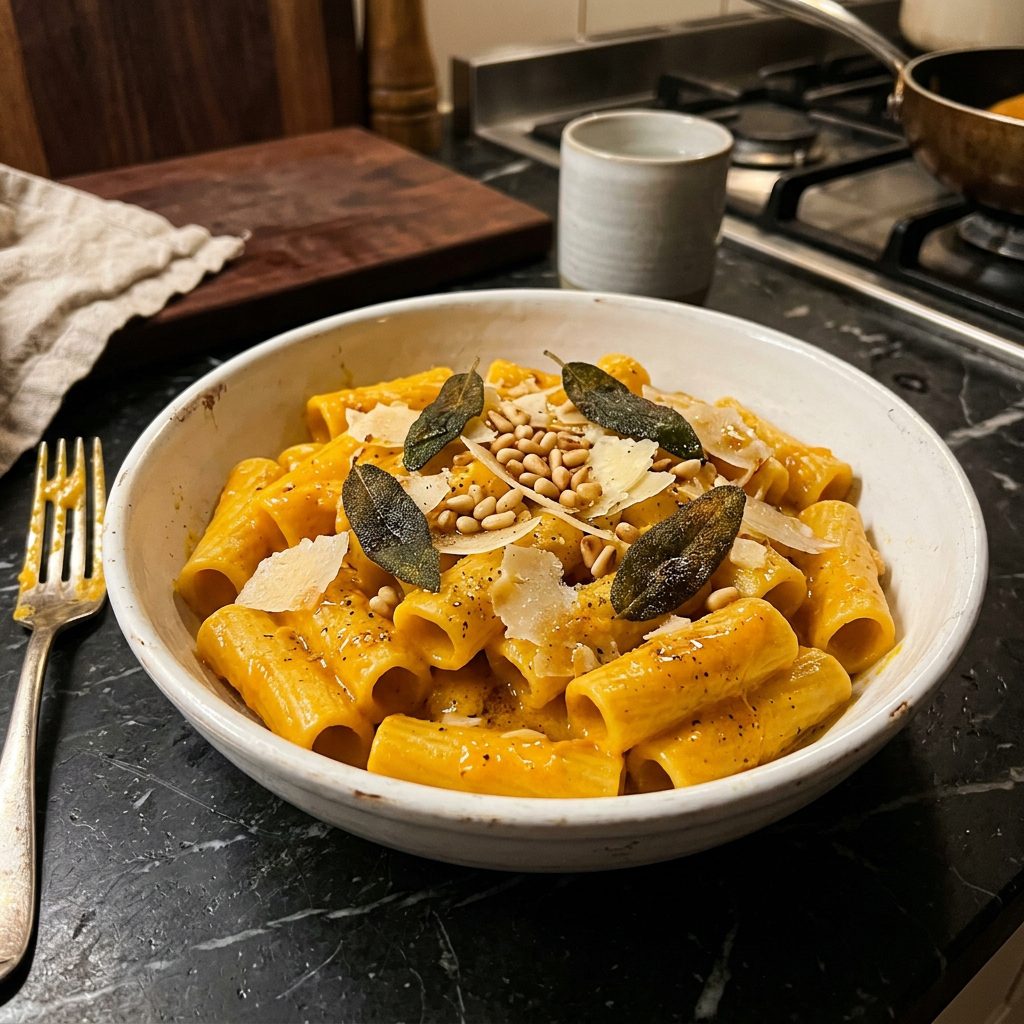
This creamy butternut squash pasta is one of those dishes that looks and tastes like you spent hours cooking — and actually takes about 45 minutes with about 10 minutes of real effort. Roasted butternut squash blended into a silky smooth sauce that is naturally sweet, deeply savory, and unbelievably creamy without any heavy cream. Tossed with pasta and finished with crispy golden sage, brown butter, and Parmesan — this butternut squash pasta is the kind of vegetarian dinner that makes everyone at the table forget they’re not eating meat. At Golden Recipes this is my favorite fall and winter pasta and I make it constantly from October through March. It is genuinely spectacular.
Why You’ll Love This Butternut Squash Pasta
Roasting the butternut squash before blending is what makes this sauce so incredibly deep and complex. The high heat caramelizes the natural sugars in the squash and creates those gorgeous golden edges that translate into a sauce with a nutty sweetness you simply can’t get from steamed or boiled squash. The blended sauce is impossibly smooth and silky — it coats every piece of pasta in the most luxurious way. And the whole thing is dairy-free until you add the Parmesan at the end — the creaminess comes entirely from the squash itself which is quite extraordinary.
The crispy sage and brown butter finishing touch is the element that elevates this from a simple vegetable pasta to something genuinely restaurant-quality. The sage fries in the butter until crispy and deeply aromatic and the butter turns golden and nutty — drizzled over the finished pasta it adds a richness and complexity that makes every single bite feel special. This butternut squash pasta is the recipe that converts people who think vegetarian food is boring.
Equipment You’ll Need
- Large rimmed baking sheet
- Large pot for boiling pasta
- Blender or food processor
- Large skillet for the brown butter and sage
- Measuring cups and spoons
- Sharp knife and cutting board
Ingredients
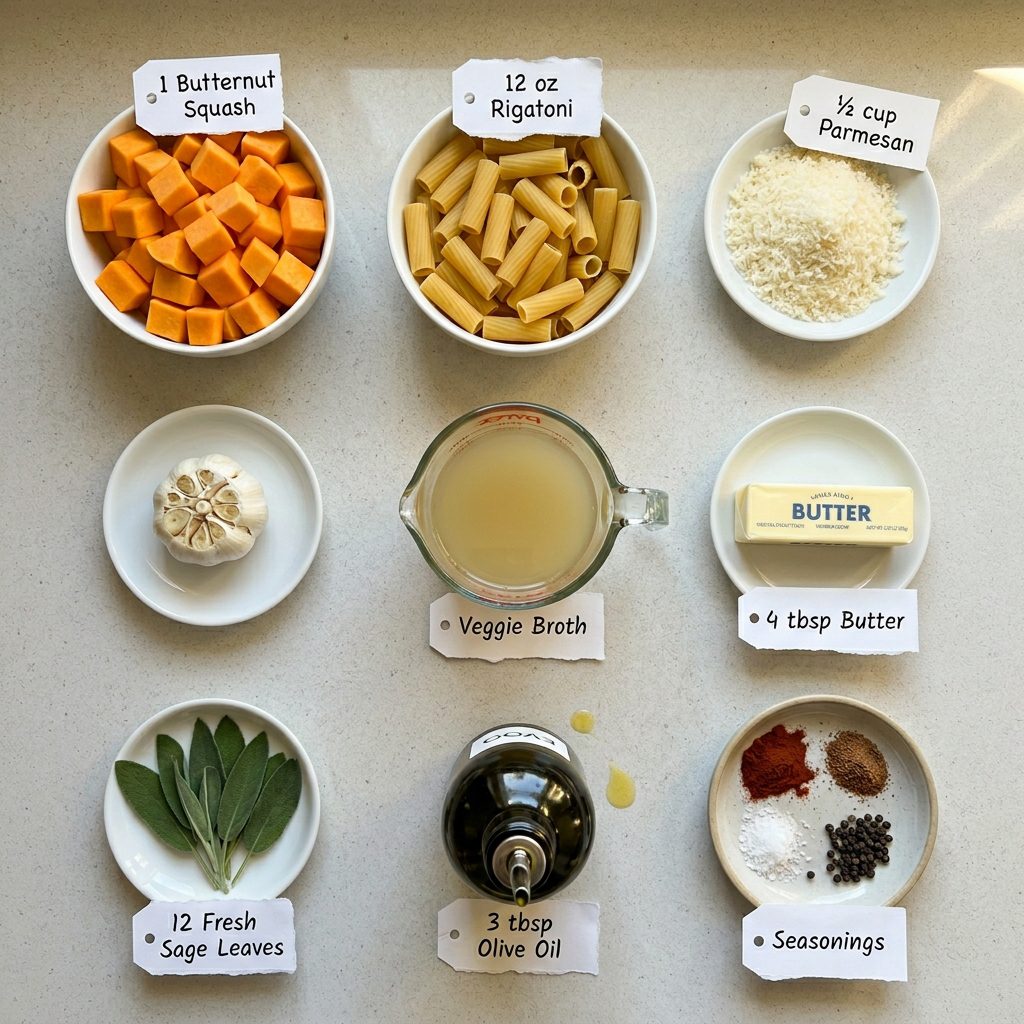
- 1 medium butternut squash — about 2 lbs peeled and cubed
- 3 tablespoons olive oil — divided
- 1 head of garlic, top cut off to expose cloves
- 1 medium onion, quartered
- Salt and black pepper to taste
- ½ teaspoon smoked paprika
- ½ teaspoon nutmeg
- ½ to 1 cup vegetable broth — for blending
- 12 oz rigatoni or penne pasta
- ½ cup freshly grated Parmesan cheese — plus more for serving
- 4 tablespoons butter
- 12 fresh sage leaves
- Toasted pine nuts or walnuts for garnish (optional)
Substitutions
Kabocha squash or pumpkin can replace butternut for a slightly different but equally delicious result. For vegan use olive oil instead of butter for the sage, skip the Parmesan or use nutritional yeast. Dried sage can replace fresh — use 1 teaspoon and add it to the sauce directly rather than frying. Any short pasta works beautifully — penne, farfalle, or shells all hold the thick sauce well. Add a pinch of cayenne or red pepper flakes to the sauce for a sweet-spicy contrast. Toasted walnuts or pecans on top add an incredible crunch.
How to Make Butternut Squash Pasta
Roast the Squash
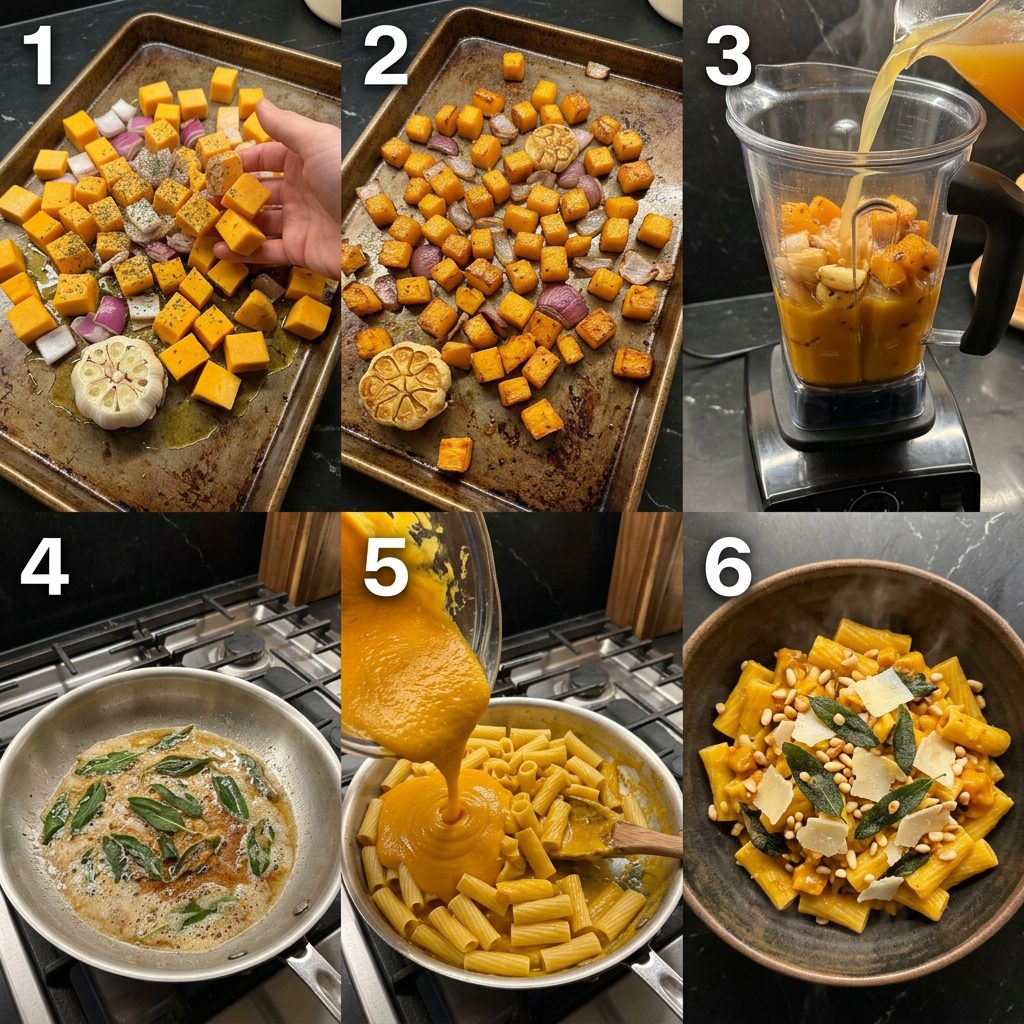
Preheat your oven to 400°F (200°C). Spread the cubed butternut squash and quartered onion on a large baking sheet. Place the garlic head cut-side up on the sheet. Drizzle everything with 2 tablespoons of olive oil and season generously with salt, pepper, smoked paprika, and nutmeg. Toss to coat evenly. Roast for 30 to 35 minutes until the squash is deeply golden and caramelized with slightly charred edges and completely tender when pierced with a fork. The garlic should be soft and golden.
Cook the Pasta
While the squash roasts bring a large pot of heavily salted water to a boil. Cook the pasta according to package directions until al dente. Before draining save 1 cup of starchy pasta water — essential for adjusting the sauce consistency. Drain and set aside.
Blend the Sauce
Squeeze the roasted garlic cloves out of their skins directly into a blender. Add the roasted squash and onion and all the caramelized juices from the pan. Add ½ cup of vegetable broth and blend on high until completely smooth and silky. Add more broth if needed to reach a pourable consistency — you want a thick but flowing sauce not a paste. Taste and adjust salt, pepper, and nutmeg. The sauce should be sweet, savory, and deeply flavorful.
Make the Brown Butter and Crispy Sage
Melt the butter in a large skillet over medium heat. Once melted add the fresh sage leaves and cook for 2 to 3 minutes until the sage leaves are crispy and the butter turns golden brown with a nutty aroma — watch it carefully, it goes from perfect to burnt quickly. Remove the crispy sage leaves with a spoon and set aside. The brown butter stays in the pan.
Combine and Serve
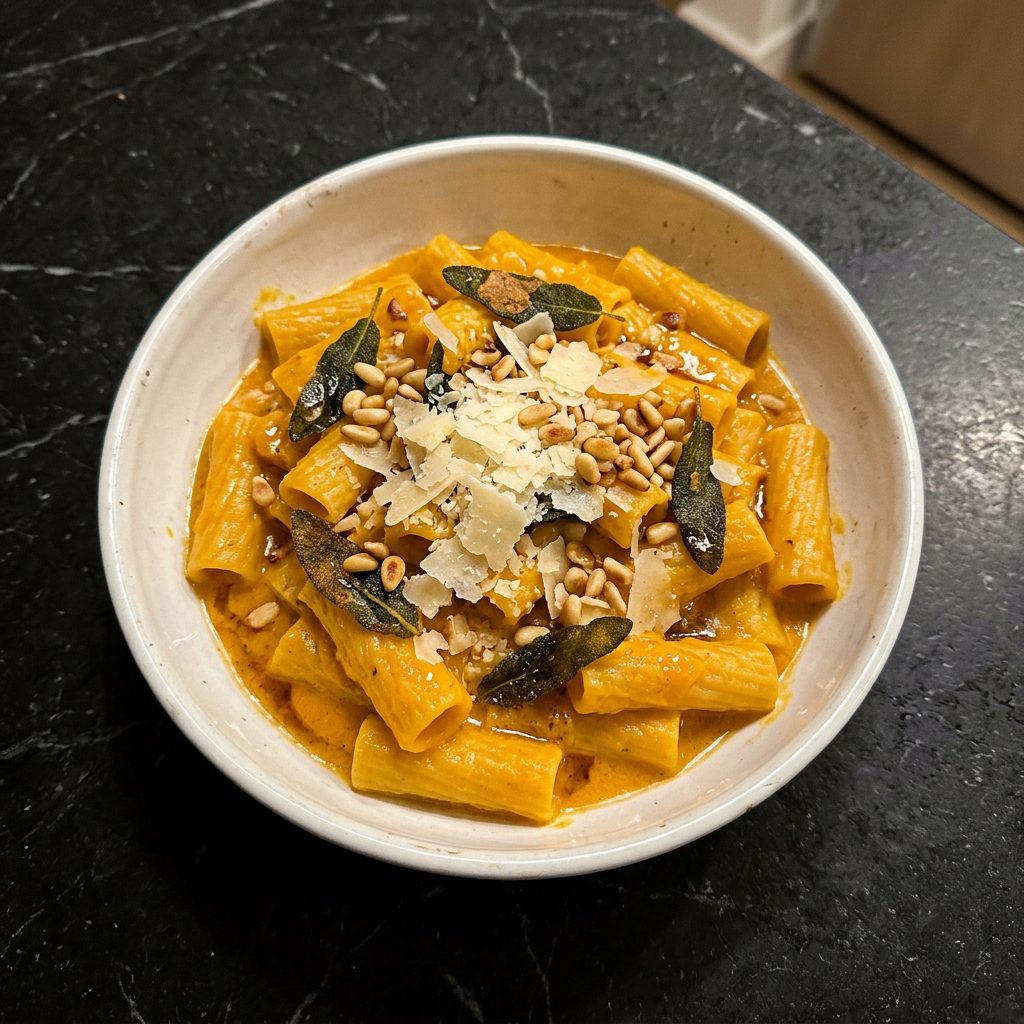
Pour the butternut squash sauce into the skillet with the brown butter and warm gently over medium-low heat. Add the cooked pasta and toss to coat — add splashes of pasta water as needed to loosen the sauce and make it cling to every piece of pasta. Remove from heat and stir in the Parmesan. Divide into warm bowls and top with crispy sage leaves, extra Parmesan, and toasted nuts if using. Serve immediately.
Variations
- Spicy version — add ½ teaspoon red pepper flakes to the sauce for a sweet-spicy contrast
- Bacon addition — crispy bacon crumbles on top add incredible smoky saltiness against the sweet squash
- Lemon finish — add lemon zest and a squeeze of juice to the finished pasta for brightness
- Gorgonzola topping — crumble blue cheese on top for a bold pungent contrast to the sweet sauce
- Stuffed pasta version — use the sauce as filling for ravioli or as a sauce for cheese tortellini
What to Serve With It
This butternut squash pasta is a complete and satisfying vegetarian main. A simple arugula salad with lemon vinaigrette, shaved Parmesan, and toasted walnuts is the perfect fresh pairing — the peppery arugula contrasts beautifully with the sweet squash. Warm focaccia or garlic bread on the side is always welcome. For a full autumn dinner spread start with a light soup and serve this as the main event. A glass of sparkling water with lemon alongside is all you need.
Pro Tips
- Roast the squash until deeply caramelized — pale squash makes a bland sauce, you want golden edges
- Always save pasta water — the starch is what makes the sauce cling and creates that silky restaurant texture
- Blend while still hot — hot squash blends smoother than cooled squash
- Watch the brown butter constantly — it goes from golden to burnt in about 30 seconds
- Roast the garlic alongside the squash — roasted garlic is sweet and mellow, raw garlic would be too sharp
Common Mistakes
- Under-roasting the squash — pale squash makes a watery bland sauce, roast until genuinely golden
- Forgetting pasta water — without it the sauce is too thick and won’t coat properly
- Burning the sage butter — watch it constantly and remove the moment the butter smells nutty
- Not seasoning enough — butternut squash needs generous salt to bring out its depth
- Blending cold squash — room temperature or hot squash blends much more smoothly
Storage and Reheating
Store the pasta and sauce separately for best results — sauce keeps in the fridge for up to 5 days. To reheat the sauce warm gently on the stovetop adding a splash of broth or pasta water to loosen. Toss with freshly cooked pasta for the best result. The sauce also freezes beautifully for up to 3 months — freeze in portion-sized containers, thaw overnight, and reheat on the stovetop. Make fresh crispy sage when serving leftovers.
FAQ
Can I use pre-cut butternut squash?
Yes — pre-cut squash from the store saves significant prep time. Make sure the pieces are roughly the same size for even roasting. Pat them dry before roasting for best caramelization.
Can I make the sauce ahead?
Yes — the squash sauce keeps in the fridge for up to 5 days and freezes for up to 3 months. Make the sauce ahead and cook fresh pasta when ready to serve.
Is this recipe vegan?
Almost — replace butter with olive oil for the sage and skip or substitute the Parmesan with nutritional yeast for a fully vegan version that’s still incredibly flavorful.
What if I don’t have a blender?
Use a food processor — it works just as well. Or use an immersion blender directly in the pot if you transfer everything to a deep saucepan first. The sauce should be completely smooth.
Conclusion
This Creamy Butternut Squash Pasta is the vegetarian dinner that impresses absolutely everyone. Silky roasted squash sauce, crispy sage, brown butter, Parmesan — it’s autumn comfort food at its most elegant and effortless.